
Manuals
Manufacturer: Nissan
Nissan Motor Company was founded in Yokohama, Japan, in 1933 and became one of the world's largest automakers, forming a long-standing alliance with Renault beginning in 1999. The company released the Leaf in 2010 as one of the first mass-market electric cars and is also known for the GT-R performance car and its pioneering work with continuously variable transmissions. Nissan's reputation has been mixed in recent years, with its CVTs drawing reliability complaints and the company experiencing financial difficulties and leadership turmoil following the arrest of former chairman Carlos Ghosn in 2018.
Model: Altima
The Nissan Altima is a mid-size sedan positioned between the compact Sentra and the larger Maxima in Nissan's lineup. Introduced in 1992 as a replacement for the Stanza, it has gone through six generations, with the current generation debuting for the 2019 model year. The Altima is typically noted for its fuel efficiency, comfortable ride, and available all-wheel drive, a feature added in 2019. Recent models also offer Nissan's ProPILOT Assist suite of driver-assistance technologies.
Year: 2009_Altima_Hybrid
The 2009 Nissan Altima Hybrid continued with its 2.5-liter four-cylinder engine paired with an electric motor and lithium-ion battery pack, with only minor trim and equipment updates for the model year. It was sold in limited markets, primarily certain U.S. states. Common service considerations include monitoring hybrid battery health, CVT transmission fluid condition, and the inverter coolant pump, which can fail with age. The regenerative braking system reduces brake pad wear, though calipers and rotors should still be inspected for corrosion.
Code: 2009
The 2009 Nissan Altima Hybrid pairs a 2.5-liter QR25DE four-cylinder gasoline engine with an electric motor and a continuously variable transmission (CVT), producing a combined output of roughly 198 horsepower. Typical maintenance focuses on CVT fluid changes, spark plug replacement, and the hybrid battery's cooling system, including its intake filter and fan. The 12-volt auxiliary battery and inverter coolant pump also warrant periodic inspection. Regenerative braking generally extends brake pad life, though pads and rotors should still be checked at regular intervals.
-
 HBB HBB.pdf
 -
 SB SB.pdf
 -
 MA MA.pdf
 -
 PG PG.pdf
 -
 RSU RSU.pdf
 -
 BRM BRM.pdf
 -
 WT WT.pdf
 -
 FSU FSU.pdf
 -
 BRC BRC.pdf
 -
 INL INL.pdf
 -
 SRS SRS.pdf
 -
 LAN LAN.pdf
 -
 MIR MIR.pdf
 -
 ST ST.pdf
 -
 Fwd fwd.pdf
 -
 SE SE.pdf
 -
 PWC PWC.pdf
 -
 EX EX.pdf
 -
 BR BR.pdf
 -
 GW GW.pdf
 -
 FAX FAX.pdf
 -
 RAX RAX.pdf
 -
 CO CO.pdf
 -
 TM TM.pdf
 -
 EM EM.pdf
 -
 AV AV.pdf
 -
 GI GI.pdf
 -
 SRC SRC.pdf
 -
 IP IP.pdf
 -
 VTL VTL.pdf
 -
 PWO PWO.pdf
 -
 SEC SEC.pdf
 -
 CCS CCS.pdf
 -
 DEF DEF.pdf
 -
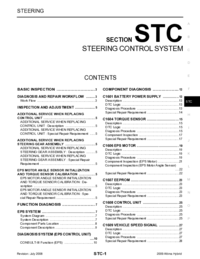 STC STC.pdf
 -
 HAC HAC.pdf
 -
 EXT EXT.pdf
 -
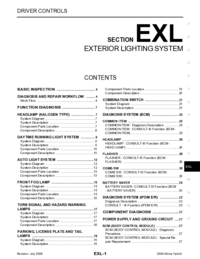 EXL EXL.pdf
 -
 HRN HRN.pdf
 -
 FL FL.pdf
 -
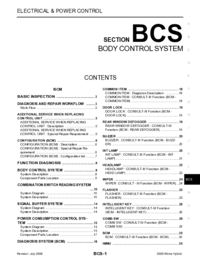 BCS BCS.pdf
 -
 WCS WCS.pdf
 -
 DLK DLK.pdf
 -
 LU LU.pdf
 -
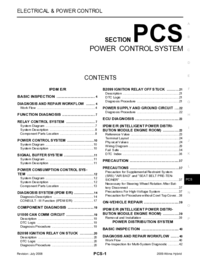 PCS PCS.pdf
 -
 MWI MWI.pdf
 -
 INT INT.pdf
 -
 EC EC.pdf
 -
 WW WW.pdf
 -
 Acc acc.pdf
 -
 HBC HBC.pdf
 -
 PB PB.pdf
 -
 RF RF.pdf
 -
 HA HA.pdf