
Manuals
Manufacturer: Nissan
Nissan Motor Company was founded in Yokohama, Japan, in 1933 and became one of the world's largest automakers, forming a long-standing alliance with Renault beginning in 1999. The company released the Leaf in 2010 as one of the first mass-market electric cars and is also known for the GT-R performance car and its pioneering work with continuously variable transmissions. Nissan's reputation has been mixed in recent years, with its CVTs drawing reliability complaints and the company experiencing financial difficulties and leadership turmoil following the arrest of former chairman Carlos Ghosn in 2018.
Model: murano
The Nissan Murano is a mid-size crossover SUV positioned between the Rogue and Pathfinder in Nissan's lineup. It debuted for the 2003 model year, with a second generation arriving in 2009 and the current third generation launching in 2015. The model is typically noted for its comfortable ride, car-like handling, and available V6 engine, with all-wheel drive offered on most trims.
Year: 2007
The 2007 Nissan Murano continued with its 3.5-liter V6 engine and continuously variable transmission, receiving minor exterior revisions to the grille and bumpers. A tire pressure monitoring system became standard equipment for this model year. Common service considerations include monitoring the CVT transmission for shudder or hesitation, as these units benefit from regular fluid changes and are known to fail prematurely in some cases. Timing chain tensioner inspection, suspension component wear, and power steering system checks are also frequently reported maintenance items for this generation.
Code: 2007_Murano
The 2007 Nissan Murano was offered in S, SL, SE, and LE trims, all powered by a 3.5L VQ35DE V6 engine paired with a continuously variable transmission (CVT). Front-wheel drive was standard, with all-wheel drive available on most trims. Typical maintenance focus includes CVT fluid changes, spark plug replacement, and inspection of suspension components such as struts and wheel bearings. The timing chain is designed for the life of the engine but should be monitored for noise or wear.
-
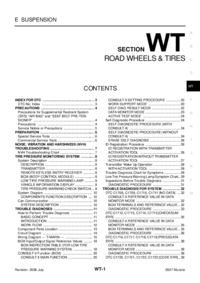 Wt wt.pdf
 -
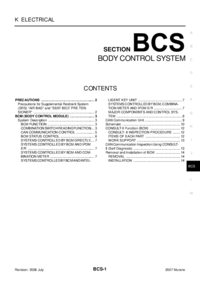 Bcs bcs.pdf
 -
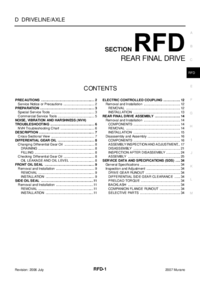 Rfd rfd.pdf
 -
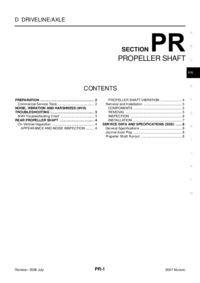 Pr pr.pdf
 -
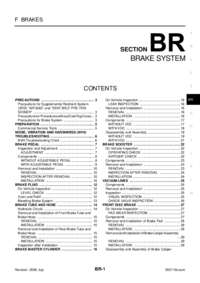 Br br.pdf
 -
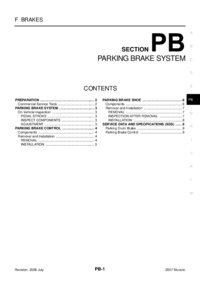 Pb pb.pdf
 -
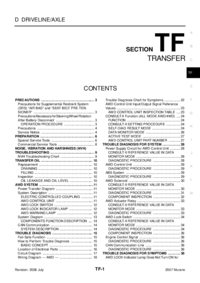 Tf tf.pdf
 -
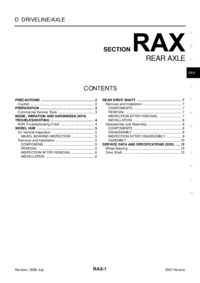 Rax rax.pdf
 -
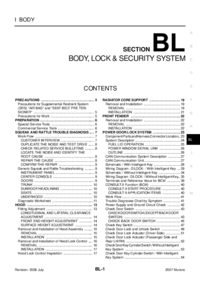 Bl bl.pdf
 -
 Idx idx.pdf
 -
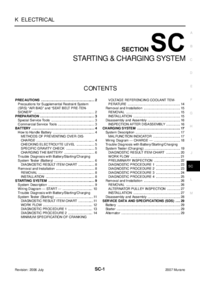 Sc sc.pdf
 -
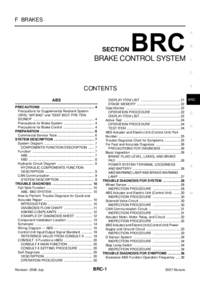 Brc brc.pdf
 -
 Fl fl.pdf
 -
 Rf rf.pdf
 -
 Ma ma.pdf
 -
 Av av.pdf
 -
 Di di.pdf
 -
 Lan lan.pdf
 -
 Gw gw.pdf
 -
 Ww ww.pdf
 -
 Lu lu.pdf
 -
 Ec ec.pdf
 -
 Fsu fsu.pdf
 -
 Ap ap.pdf
 -
 Ps ps.pdf
 -
 Em em.pdf
 -
 Fax fax.pdf
 -
 Ex ex.pdf
 -
 Gi gi.pdf
 -
 Acc acc.pdf
 -
 Atc atc.pdf
 -
 Rsu rsu.pdf
 -
 Lt lt.pdf
 -
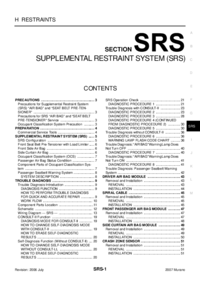 Srs srs.pdf
 -
 Acs acs.pdf
 -
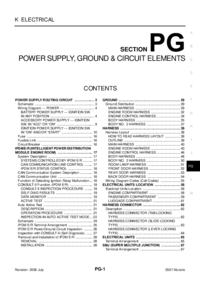 Pg pg.pdf
 -
 Fwd fwd.pdf
 -
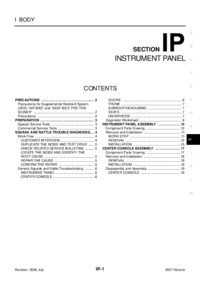 Ip ip.pdf
 -
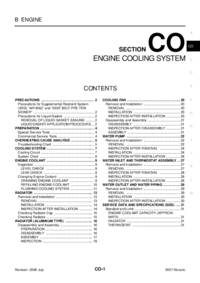 Co co.pdf
 -
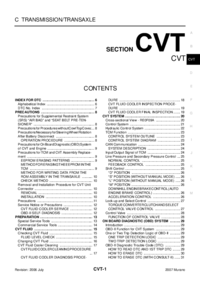 Cvt cvt.pdf
 -
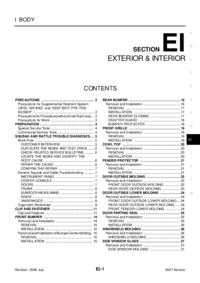 Ei ei.pdf
 -
 Sb sb.pdf
 -
 Se se.pdf